

By Henry Okurut
Uganda has intensified its push to attract foreign direct investment, hosting a delegation of more than 40 Chinese investors keen on exploring opportunities in key sectors of the economy.
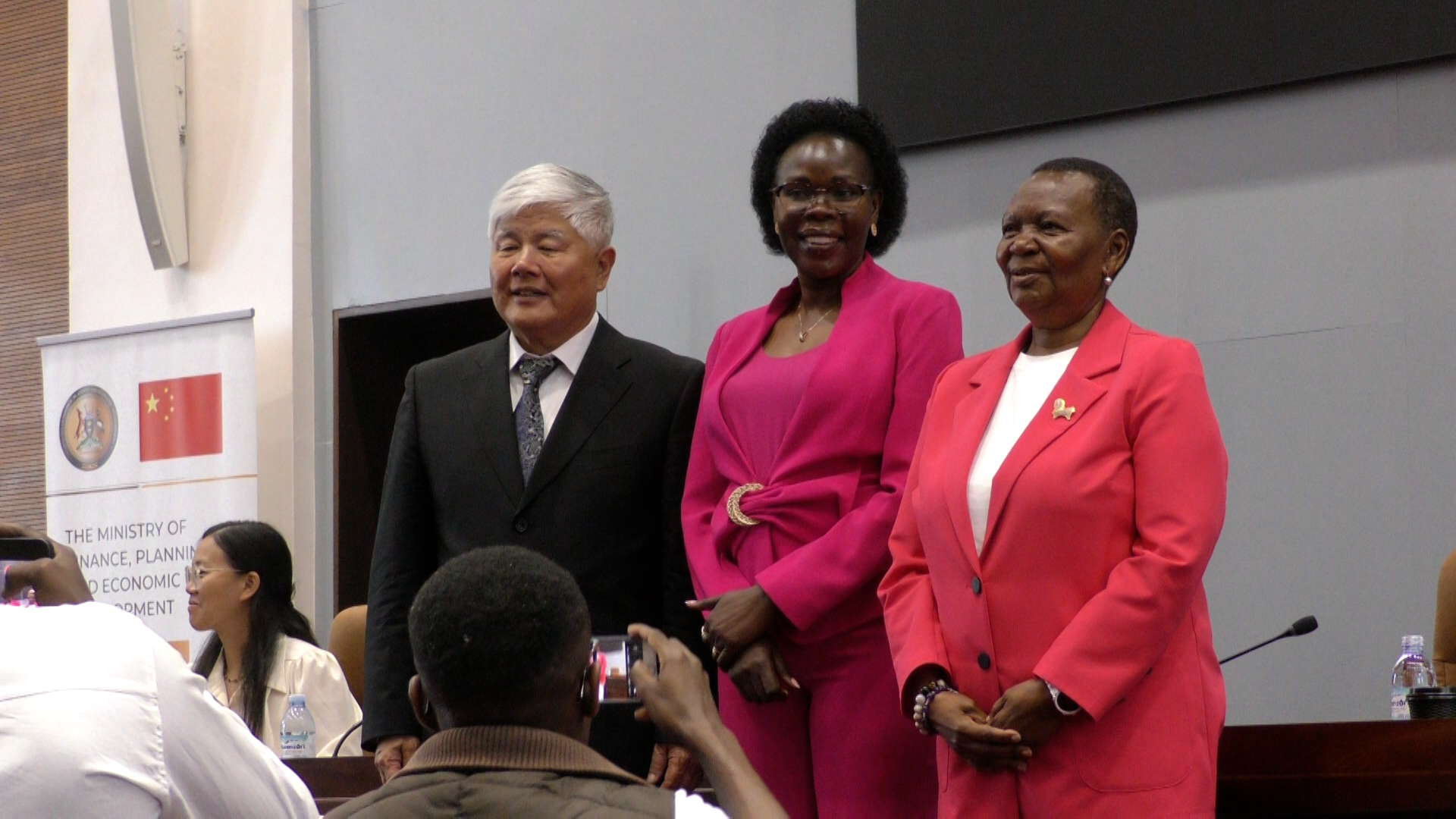
The delegation, led by Uganda’s Ambassador to China Olive Wonekha, was received by the State Minister for Investment and Privatization Evelyn Anite, who positioned Uganda as a peaceful and profitable destination for global capital.
Speaking during the engagement, Anite assured the investors of government support, emphasizing Uganda’s stability, investor-friendly policies and ready market.
“We welcome our visitors from China to Uganda, the Pearl of Africa. This is a peaceful and stable country, and we are ready to support you to invest and succeed,” she said.
The investors are on a fact-finding mission, with interests spanning manufacturing, agriculture, renewable energy and agro-processing sectors the government has identified as critical to driving economic growth.
Ambassador Wonekha described the visit as part of Uganda’s broader economic diplomacy strategy, aimed at leveraging long-standing ties with China to attract investment.
“This delegation has come to see and hear for themselves what Uganda has to offer. They are particularly interested in agriculture, manufacturing and coffee value addition,” she noted.
Uganda and China share a relationship spanning more than six decades, which has already yielded significant infrastructure development and industrial investments. Chinese firms have established a strong presence in industrial parks such as Kapeka and Mbale, contributing to job creation and skills transfer.
Anite highlighted these success stories as proof that Uganda is a viable destination for investors, noting that government is keen on expanding such partnerships.
“For over 60 years, Uganda and China have enjoyed a strong partnership. What we are doing now is harnessing these benefits, especially in manufacturing where Chinese investors are already creating jobs,” she said.
Government is offering a range of incentives to attract new investors, including tax holidays, duty-free importation of plant and machinery, and access to land in industrial parks. Business registration has also been streamlined, taking less than an hour to complete.
Beyond incentives, Uganda’s natural endowments remain a major draw. With fertile soils, favourable climate and a strategic location in East Africa, the country presents strong prospects in agriculture and agro-processing. Coffee, Uganda’s leading export, remains a key area of interest for the visiting investors, particularly in value addition.
According to officials, several members of the delegation have already expressed interest in setting up operations in Uganda, with some opting to extend their stay to finalize investment plans.
Anite welcomed the development, describing it as a positive signal of investor confidence in Uganda’s economic direction.
“This is very exciting. Some investors have indicated they want to stay and begin setting up their businesses immediately,” she said.
Uganda is targeting a significant increase in foreign direct investment as part of its broader strategy to grow the economy tenfold. Officials believe that attracting investors in priority sectors such as agriculture, tourism and manufacturing will be key to achieving this ambition.
As Uganda continues to position itself as a regional investment hub, engagements like this underscore growing global interest in the country’s potential anchored on peace, stability and opportunity.
hokurut51@gmail.com, +256700114138
