

By Henry Okurut
Uganda’s ambition to deliver faster, cheaper and more transparent public services is steadily being realised through the expansion of the National Backbone Infrastructure (NBI), a flagship government project that is now entering its most ambitious phase yet.
Launched in 2006 ahead of the Commonwealth Heads of Government Meeting (CHOGM), the NBI has evolved over nearly two decades through multiple phases, gradually laying the digital foundation upon which government services, innovation and the private sector now depend.
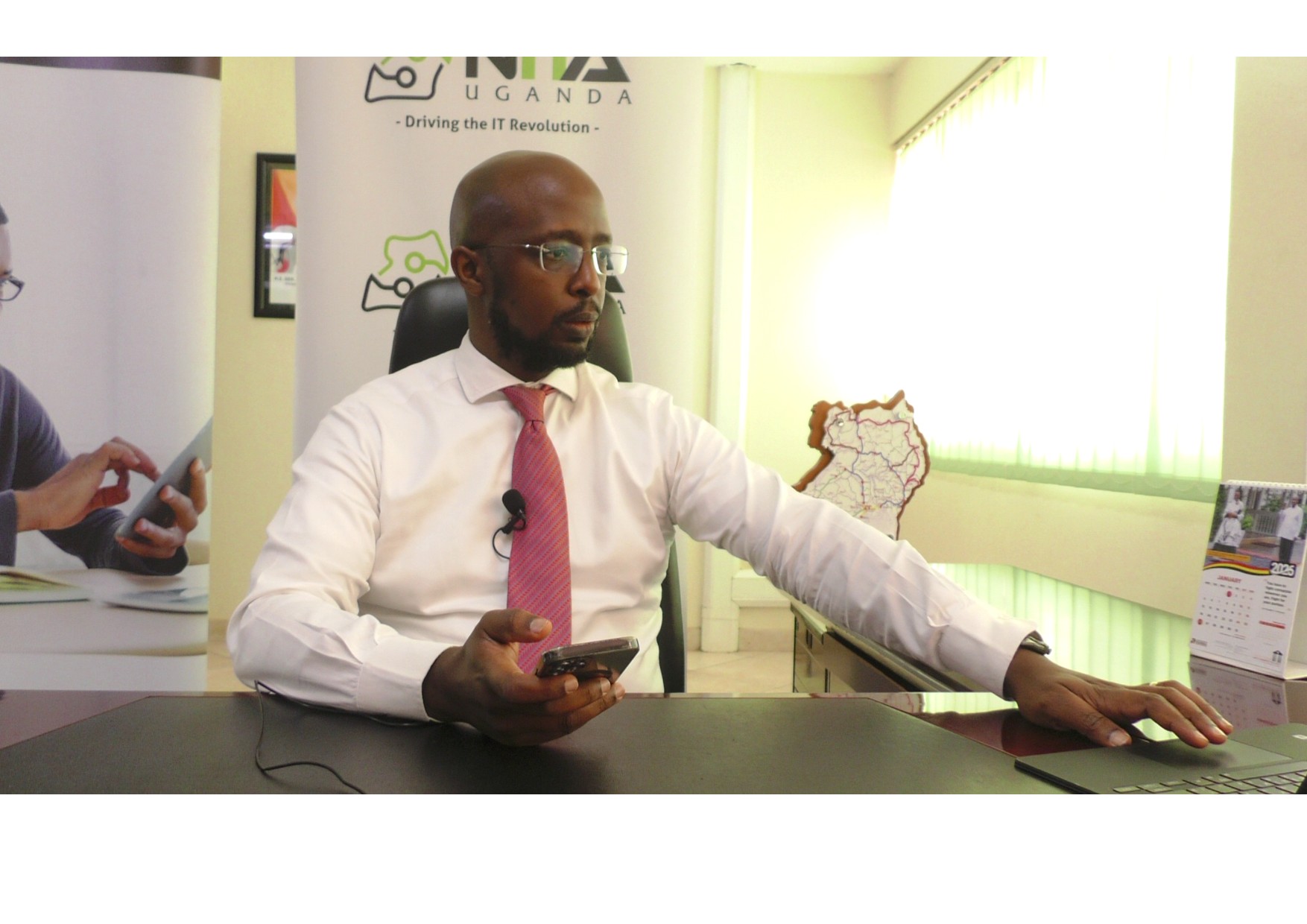
According to Dr Hatwib Mugasa, the Executive Director of the National Information Technology Authority–Uganda (NITA-U), the country is currently implementing Phase Five, which was officially commissioned in December 2024 in Moroto, signalling a decisive push to complete nationwide connectivity.
“The backbone has gone through Phase One, Two, Three, Four, and now Phase Five. Our target in this phase is to complete connectivity installation across the country,” Dr Mugasa said.
Currently, the NBI has a physical presence in 48 districts, providing high-capacity and highly reliable government connectivity complemented by private sector networks. Under Phase Five, government plans to connect 68 districts, with additional financing from the World Bank expected to bring the total to 88 districts.
Uganda has 146 districts, and the long-term goal, Dr Mugasa says, is full national coverage.
“Within five years, we should have 100 percent of all districts connected to the backbone. This will be the de facto highway for all internet traffic in the country.”
Once complete, the NBI will span nearly 6,000 kilometres of fibre optic cable, of which about 1,200 kilometres have already been laid. Initial delays caused by equipment procurement and concrete pole manufacturing have since been overcome, allowing deployment to accelerate.
One of the NBI’s most significant impacts has been the dramatic reduction in the cost of internet bandwidth for government.
Dr Mugasa revealed that in the early years, government paid as much as USD 1,260 per megabit per second per month. Today, that cost has dropped to about USD 35, with projections pointing to USD 25 or less in the next three years.
This has been enabled by economies of scale and diversified international connectivity through Kenya and Tanzania, with additional capacity expected from the EACOP fibre network.
“Cost is no longer the issue it used to be. Uganda is now at par with countries that enjoy some of the lowest bulk data costs,” he noted.
Beyond connectivity, the real value of the NBI is now being realised through citizen-facing platforms such as UG PASS, Uganda’s national digital authentication and electronic signature solution.
Dr Mugasa says UG PASS was developed to address long-standing challenges of forgery, impersonation and fake government documents, which have undermined trust in public communication.
“We have seen so many instances of misleading or fake government documents, even carrying signatures of officials. With digital solutions, documents can now be signed securely and verified by the recipient,” he explained.
UG PASS enables digital signing, authentication and verification of government documents, complete with timestamps and identity binding. Once enrolled, users are authenticated using their National Identification Number (NIN) alongside biometric checks, ensuring that signatures are uniquely tied to the rightful owner.
“Even if you have an ID, the system checks biometric parameters to confirm you are the genuine owner,” Dr Mugasa said.
The platform allows officials to sign thousands of pages or contracts instantly, eliminating manual processes that previously consumed time and resources.
“If you are signing 2,000 pages, you can now do it with a single click. You can even bulk-sign thousands of documents genuinely,” he added.
UG PASS is also laying the groundwork for a national Public Key Infrastructure (PKI), allowing Uganda to secure its digital ecosystem independently.
Instead of relying on international security certificates, government will now be able to issue locally verifiable SSL certificates, ensuring jurisdictional control and fraud traceability.
“If fraud happens, we can track it 100 percent locally. Currently, when international certificates are compromised, we lack jurisdiction,” Dr Mugasa explained.
This infrastructure will secure passports, national IDs, driving permits, birth certificates, academic credentials and land records, significantly reducing fraud and document duplication.
Built on the NBI, UG Hub integrates government systems, allowing institutions to securely share data instead of sending citizens from office to office.
“Instead of asking someone to go and get information from another agency, we just press a button,” Dr Mugasa said.
Banks are already leveraging this integration to verify customers instantly, accelerating account opening and expanding access to financial services.
The next milestone is the rollout of a Government Super App, which will bring all public services under one digital roof.
“You log in once and access all services; passport, driving licence, land, tax everything in one app,” he said.
Under Phase Five, 13 districts have already been connected, with Kalangala and Buvuma Islands earmarked for last-mile connectivity using underwater fibre cables in Lake Victoria.
“Underwater deployment is faster, efficient and avoids many land-based obstacles. Within a year, both islands should be connected,” Dr Mugasa said.
Digital platforms supported by NBI have revolutionised public finance through systems such as the Integrated Financial Management System (IFMS), reducing payment timelines from months to days while eliminating risks associated with manual cash handling.
Government is also transitioning to e-procurement, a move expected to curb corruption and improve transparency.
“Manual processes created room for middlemen and kickbacks. Digital procurement will close those gaps,” Dr Mugasa noted.
Beyond government, the NBI is catalysing innovation in agriculture, tourism, finance and Business Process Outsourcing (BPOs), positioning Uganda as a competitive regional digital hub.
“Connectivity is not just about social media. It is about productivity, jobs and economic growth,” Dr Mugasa said.
As platforms like UG PASS mature and the NBI extends nationwide, Uganda’s digital transformation is moving decisively from policy to practice; building trust, reducing costs and bringing government closer to the people.
“We are digitising not just to modernise, but to make government more secure, accountable and efficient,” Dr Mugasa concluded.
hokurut51@gmail.com, +256700114138
